
About Secondary Hyperparathyroidism (SHPT)
If you have chronic kidney disease (CKD) in Stage 3, Stage 4, or Stage 5, there's another condition for which you may need treatment. This condition is called secondary hyperparathyroidism (SHPT), which is characterized by increased parathyroid hormone levels. Many people at Stages 3, 4, and 5 of CKD have SHPT or will develop SHPT. If you have CKD, ask your doctor which stage you are in and ask him or her about getting a parathyroid hormone (PTH) test.
to
38% of Stage 3 CKD patients have SHPT1,2
(eGFR=30-59 mL/min/1.73 m2)
(eGFR=15-29 mL/min/1.73 m2)
90% of patients on dialysis (Stage 5) are
affected by SHPT1
(eGFR<15 mL/min/1.73 m2)
When kidneys are healthy, they filter waste and help to balance fluids, minerals, and other substances in your body.
When kidney function declines, it can lead to a silent condition (with no symptoms) called secondary hyperparathyroidism (SHPT). SHPT is very common in people in Stages 4 and 5 of CKD.
CKD and SHPT can cause the phosphorus and calcium levels in your body to become out of balance. When calcium levels in your body become too low due to SHPT, your parathyroid hormone (PTH) raises the levels by taking calcium from your bones, which may impact your bone health.
Untreated SHPT can also cause your parathyroid glands to enlarge, potentially resulting in permanent damage.
How SHPT affects the bones
and parathyroid glands
Effect of SHPT on the parathyroid glands
SHPT causes your parathyroid glands to become enlarged and produce too much PTH. By growing too large, these glands can become resistant to treatment and may require surgery.
Click here to see thelong-term effects of SHPT
on the parathyroid glands
Effect of SHPT on the bones
When calcium levels in your body become too low due to SHPT, PTH signals calcium to be released from your bones in order to increase the calcium levels in the rest of your body.
Click here to see thelong-term effects of SHPT on
the bones
Frequently asked questions about SHPT
What is SHPT?
SHPT is a condition in which the parathyroid glands produce too much PTH. SHPT is common in people in Stages 3, 4, and 5 of CKD.
What are the parathyroid glands?
The parathyroid glands are four pea-sized glands. They are located in the neck, behind the thyroid gland.
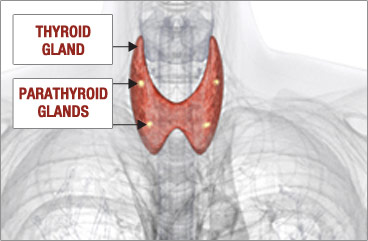
What do the parathyroid glands do?
The parathyroid glands produce parathyroid hormone, or PTH. PTH is important because it helps to control the amount of calcium and phosphorus in the body.
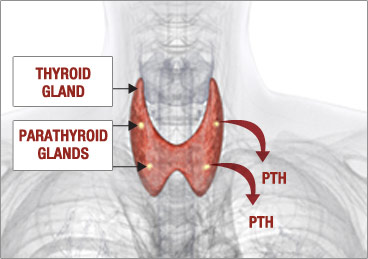
In CKD, kidney function decreases. The kidneys can’t do their jobs effectively.
- Vitamin D cannot be activated — When kidney function decreases, the body has trouble turning vitamin D (from diet and other sources) into the “active” form of vitamin D (calcitriol) that the body can use
- Parathyroid glands become overactive (secondary hyperparathyroidism) —
When calcium and/or active vitamin D levels get too low, the parathyroid glands put out more PTH - Calcium and phosphorus become out of balance — CKD and SHPT can cause calcium and phosphorus levels in your body to become out of balance
Now that you know more about SHPT, it is important to take action:
If you are one of the more than 22-25 million patients with chronic kidney disease
(CKD) in Stages 3, 4, or 5, make sure you talk to your doctor about SHPT
(secondary hyperparathyroidism).3,4
Simple blood tests can help you and your doctor keep a check on your PTH levels. Talk to your doctor about getting a PTH test.
If you have SHPT, your doctor can discuss with you why treating SHPT is important.
Next: Why Treating SHPT Is Important
References:
- Levin A, Bakris GL, Molitch M, et al. Prevalence of abnormal serum vitamin D, PTH, calcium, and phosphorus in patients with chronic kidney disease: results of the study to evaluate early kidney disease. Kidney Int. 2007;71(1):31-38.
- Andress DL, Coyne DW, Kalantar-Zadeh K, Molitch ME, Zangeneh F, Sprague SM. Management of secondary hyperparathyroidism in stages 3 and 4 chronic kidney disease. Endocr Pract. 2008;14(1):18-27.
- Stauffer ME, Fan T. Prevalence of anemia in chronic kidney disease in the United States. PLoS One. 2014;9(1):e84943.
- United States Renal Data System. 2018 USRDS annual data report: epidemiology of kidney disease in the United States. National Institutes of Health, National Institute of Diabetes and Digestive and Kidney Diseases, Bethesda, MD, 2018.
- Important Safety Facts
- Do not take ZEMPLAR if...
- Tell your doctor...
- What to expect
- ZEMPLAR Use
- Helpful resources
You should not start or continue to take ZEMPLAR Capsules if you have symptoms of high calcium or vitamin D. Taking too much vitamin D or taking it for a long time can cause very high calcium or vitamin D levels which may cause serious health problems and the need for emergency medical care. Signs of high calcium include feeling tired, difficulty thinking clearly, loss of appetite, nausea, vomiting, constipation, increased thirst, increased urination, and weight loss. Tell your doctor if you are having any of these signs.
Before and while taking ZEMPLAR Capsules, tell your doctor about all medications that you are taking, including prescription and nonprescription drugs, aluminum-containing compounds, supplements, and herbal preparations, or any change in your medical condition.
Your doctor should measure your blood levels of parathyroid hormone (PTH), calcium, and phosphorus before starting you on and while you are taking ZEMPLAR Capsules. Your doctor may order the tests more often when you begin ZEMPLAR Capsules or if your dose is changed. Your doctor may adjust your dose based on the results of your blood tests.
It is important that you follow your ZEMPLAR medication plan exactly as your doctor has ordered and follow any instructions you were given about your diet and phosphorus restrictions.
The most common side effects with the use of ZEMPLAR Capsules include diarrhea, inflammation of the nose and throat, dizziness, vomiting, high blood pressure, allergic reaction, nausea, and swelling.
This is the most important information to know about ZEMPLAR Capsules. For more information, talk with your health care provider.
Reference: 1. ZEMPLAR® (paricalcitol) Capsules [package insert]. North Chicago, IL: AbbVie Inc.
You have symptoms of high calcium or vitamin D.
Reference: 1. ZEMPLAR® (paricalcitol) Capsules [package insert]. North Chicago, IL: AbbVie Inc.
See additional Important Safety Information and Package Insert for details.
- Tell your doctor if you are having signs of high calcium levels, which include feeling tired, difficulty thinking clearly, loss of appetite, nausea, vomiting, constipation, increased thirst, increased urination, and weight loss.
- Before and while taking ZEMPLAR Capsules, tell your doctor about all medications that you are taking, including prescription and nonprescription drugs, aluminum-containing compounds, supplements, and herbal preparations, or any change in your medical condition.
Reference: 1. ZEMPLAR® (paricalcitol) Capsules [package insert]. North Chicago, IL: AbbVie Inc.
See additional Important Safety Information and Package Insert for details.
- You should have blood tests to measure your blood levels of parathyroid hormone, calcium, and phosphorus while you are on ZEMPLAR.
- Your doctor may order the tests more often when you begin ZEMPLAR Capsules or if your dose is changed.
- Your doctor may adjust your dose based on the results of your blood tests.
Reference: 1. ZEMPLAR® (paricalcitol) Capsules [package insert]. North Chicago, IL: AbbVie Inc.
See additional Important Safety Information and Package Insert for details.
ZEMPLAR® (paricalcitol) Capsules are an active form of vitamin D used to prevent and treat secondary hyperparathyroidism (increased parathyroid hormone levels) in adults and children 10 years of age and older with Stage 3 or Stage 4 chronic kidney disease and in Stage 5 patients on dialysis.
Reference: 1. ZEMPLAR® (paricalcitol) Capsules [package insert]. North Chicago, IL: AbbVie Inc.
See additional Important Safety Information and Package Insert for details.
ZEMPLAR Capsules are a prescription medication.1
You are encouraged to report negative side effects of prescription drugs to the FDA. Visit www.fda.gov/medwatch or call 1-800-FDA-1088.
If you are having difficulty paying for your medicine, AbbVie may be able to help. Visit AbbVie.com/myAbbVieAssist to learn more.
You can also call 1-877-ZEMPLAR
(1-877-936-7527) for additional information and select Option 2 to find out whether other financial assistance options may be available.
Reference: 1. ZEMPLAR® (paricalcitol) Capsules [package insert]. North Chicago, IL: AbbVie Inc.
See additional Important Safety Information and Package Insert for details.
